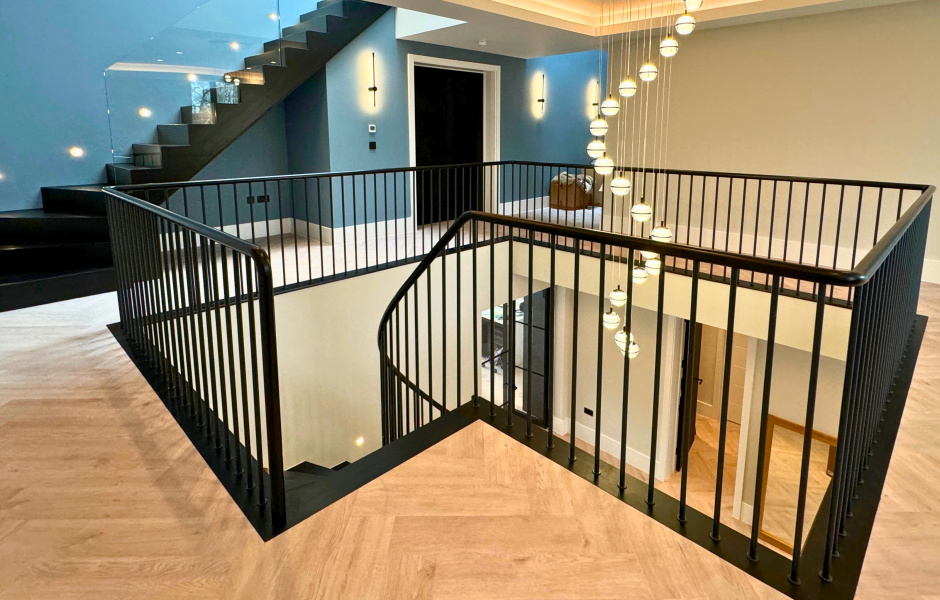
The Role of Staircase Design in Modern Renovation
Modern renovation has reimagined the staircase. It is no longer just a transition between floors; it is a sculptural anchor - the architectural centrepiece of the home. A truly inspired design can redefine the entire flow of a living space.
However, bold vision must always align with structural reality. Budgetary limits and building regulations dictate the boundaries of what is possible. Currently, central spine and cantilever designs lead the market, each representing a unique approach to engineering and style. Selecting the right one is a matter of discernment, requiring a deep understanding of both form and function.
Central Spine Staircase : Definition and Structural Composition
A central spine staircase is defined by singular structural beam - typically fabricated from metal - running along the centre beneath the treads. The spine acts as the primary load - bearing element, distributing weight efficiently while allowing the steps to project outward on either side.
Unlike traditional systems, which rely on lateral supports, the central spine consolidates structural integrity into a single axis. The result is both robust and elegantly restrained.
Visual characteristics and design flexibility
Visually, central spine staircases achieve a delicate equilibrium. They appear open and lightweight, yet retain a reassuring sense of solidity. The exposed spine can be articulated in various profiles—rectilinear for a contemporary aesthetic, or subtly curved for a more expressive form.
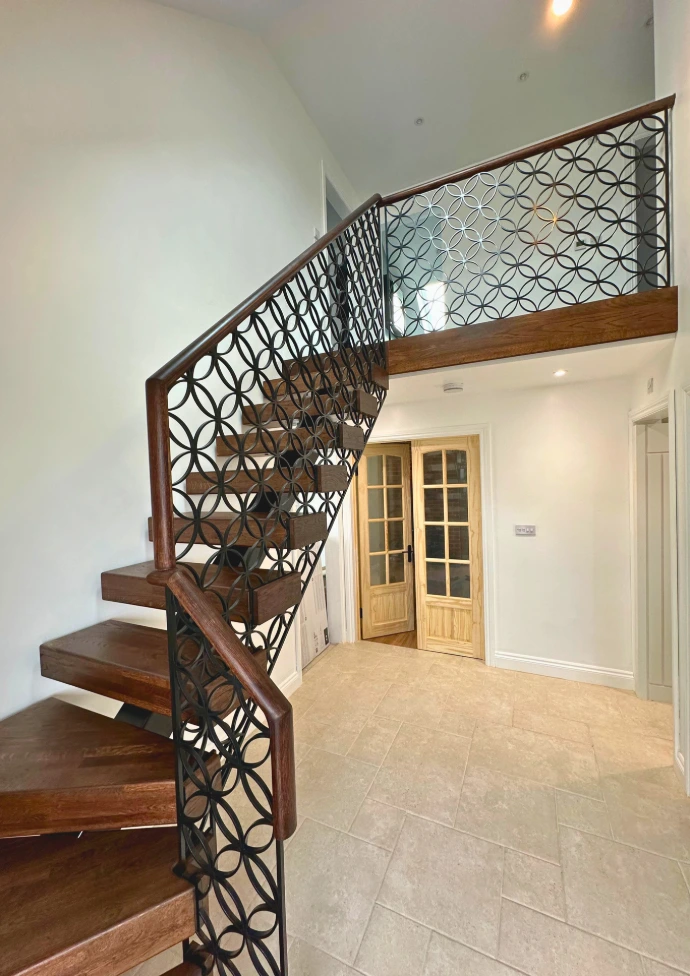
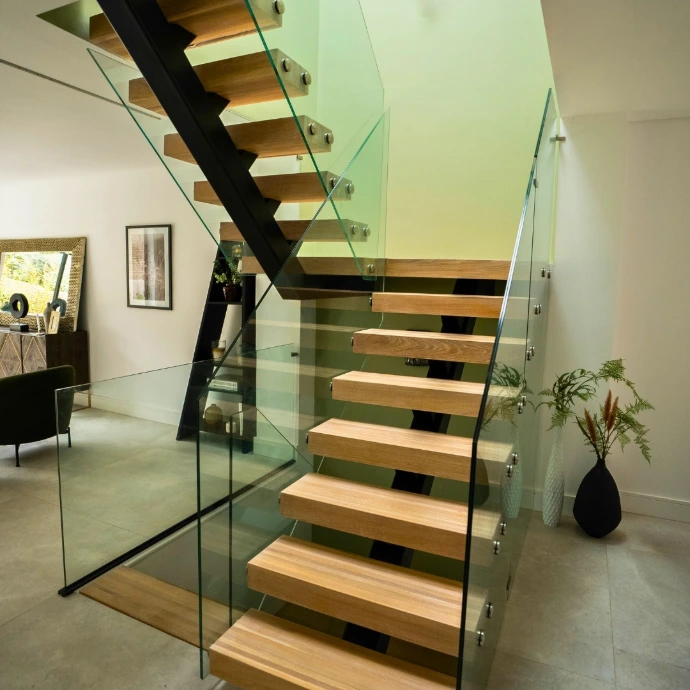
Choosing oak treads, frameless glass balustrades, or refined metal spindles further enhances their versatility. They adapt seamlessly to both modern and transitional interiors, offering a bespoke yet grounded presence.
Central spine staircase renovation process accommodating with structural independence reduces reliance on surrounding walls, making them particularly suitable for retrofit projects where existing load-bearing elements may be limited or irregular.
Installation is often more straightforward compared to more complex systems. The spine can be pre-fabricated with precision, delivered in sections, and installed with minimal disruption. This efficiency is invaluable in occupied homes or time-sensitive projects.
Cantilever Staircases: Definition and Engineering Principles
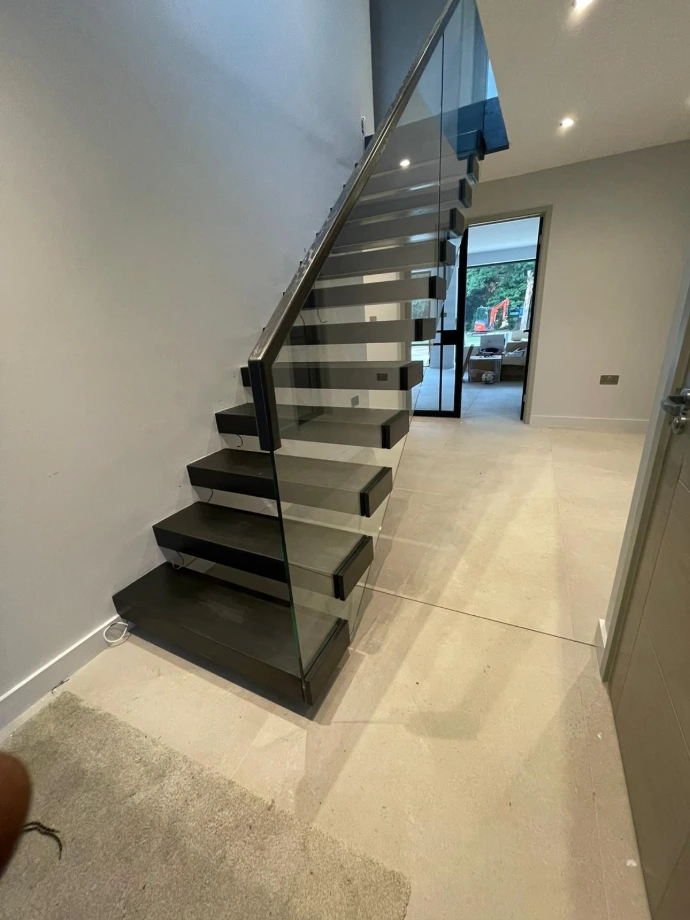
Cantilever staircases, by contrast, operate on a fundamentally different principle. Each tread is anchored directly into a structural wall, typically concealed within the construction. The support is hidden, creating the illusion that the steps are floating freely in space.
This design demands meticulous engineering. The wall must possess sufficient structural capacity—often reinforced concrete or specially prepared steel frameworks—to bear the loads transferred by the projecting treads.
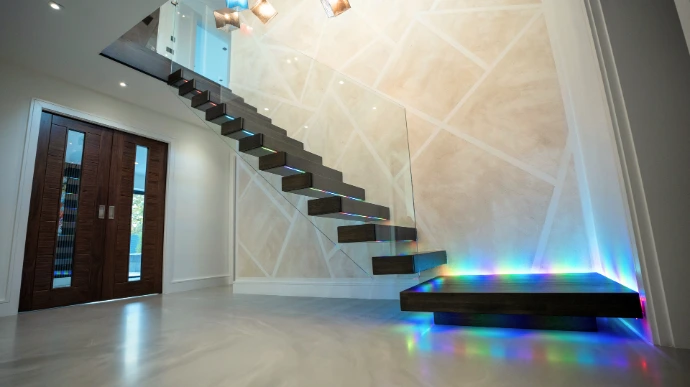
Floating Illusion
The aesthetic of a cantilever staircase is undeniably compelling. It embodies minimalism in its purest form. There are no visible supports, no central beam—only a sequence of hovering treads, often paired with frameless glass to preserve transparency.
The effect is ethereal. Light permeates the space uninterrupted. The staircase becomes less an object and more an experience, a subtle choreography of form and void.
Spatial and Structural Requirements
However, this elegance comes with constraints. Cantilever systems are inherently dependent on the integrity of the supporting wall. In many renovation scenarios, existing walls may not meet the necessary structural criteria, necessitating significant modifications.
Such interventions can be invasive. They may involve opening walls, introducing steel reinforcements, or even reconstructing sections entirely. Consequently, careful evaluation at the earliest design stage is essential.
Structural Performance and Load Distribution
Central spine staircases distribute loads through a singular beam, offering predictable and reliable performance. Cantilever staircases, on the other hand, transfer forces into the wall, requiring precise calculations and flawless execution.
While both systems can achieve exceptional strength, the margin for error is narrower in cantilever designs.
Installation Complexity and Site Constraints
In practical terms, central spine staircases are generally less complex to install. They require fewer invasive alterations and can be integrated into a wider range of structural conditions.
Cantilever staircases demand a higher degree of site preparation. Structural reinforcement, coordination with builders, and exacting tolerances all contribute to a more intricate installation process. In practical terms, central spine staircases
Staircase Cost Implications and Fabrication Considerations
Cost is inevitably a decisive factor. Central spine staircases tend to be more cost-effective due to their relative simplicity in fabrication and installation.
Cantilever staircases, with their concealed engineering and stringent requirements, often command a premium. The complexity of both design and execution is reflected in the overall investment.
Design Impact and Visual Presence
From a purely visual standpoint, cantilever staircases offer unparalleled minimalism. They are bold in their restraint.
Central spine staircases, while slightly more expressive, provide a balanced aesthetic—combining openness with a defined architectural presence. They are often perceived as both striking and reassuringly substantial.
Types of Renovations
New Builds vs. Retrofit Projects
Cantilever staircases are ideally suited to new builds, where structural provisions can be incorporated from the outset. The necessary reinforcements can be designed into the fabric of the building itself.
In retrofit scenarios, central spine staircases often emerge as the more pragmatic choice. Their adaptability allows them to integrate with existing structures without extensive reconstruction.
Structural Limitations of Existing Properties
Older properties, in particular, may present challenges for cantilever designs. Masonry walls, timber frames, or uncertain load-bearing capacities can limit feasibility.
Central spine staircases circumvent many of these issues. Their independence from wall support provides a level of flexibility that is invaluable in renovation contexts.
Coordination with Architects and Contractors
Both systems benefit from early collaboration with architects and contractors. However, cantilever staircases demand a higher degree of coordination, given their reliance on concealed structural elements.
Central spine staircases, while still requiring precision, are generally more forgiving in terms of sequencing and site conditions.
Key Design Considerations Before Choosing
Building Regulations and Compliance
Compliance with building regulations is non-negotiable. Requirements regarding tread dimensions, riser heights, and balustrade safety must be meticulously observed.
Open tread designs, in particular, must adhere to strict guidelines to ensure safety, especially in residential and commercial settings.
Material Selection and Finishes
Materiality plays a pivotal role in the final outcome. Oak treads introduce warmth and tactility. Metal elements provide structure and contrast. Glass enhances transparency and light diffusion.
The interplay of these materials should be considered holistically, ensuring coherence with the broader interior scheme.
Durability and Maintenance
Durability is often overlooked in the pursuit of aesthetics. Yet, it is essential. Finishes must withstand daily use, and structural components must remain stable over time.
Central spine staircases, with their accessible structure, may offer advantages in maintenance. Cantilever systems, while visually pristine, can be more challenging to access if issues arise.
Making the Right Decision
The choice between a central spine and a cantilever staircase is not merely a stylistic preference. It is a synthesis of ambition, feasibility, and context.
For those seeking a balance of elegance, adaptability, and practicality, the central spine staircase presents a compelling solution. For those pursuing uncompromising minimalism—and prepared to meet the structural demands—the cantilever staircase offers an extraordinary visual reward.
Ultimately, the most successful outcomes are born from informed decisions. Engaging with experienced designers and engineers ensures that the chosen staircase not only elevates the space but endures as a testament to thoughtful design.
Contact us today sales@ovoms.com