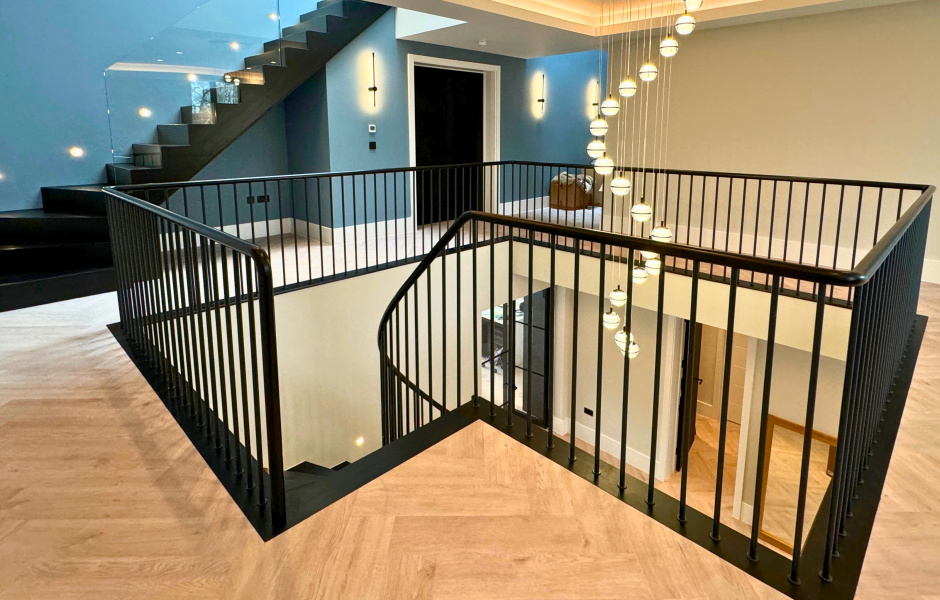
Floating stairs are designed to create the illusion of weightlessness—appearing to hover in mid-air without visible support. Unlike traditional staircases, which rely on bulky stringers or visible framework, floating staircases are supported by a specially engineered mounting system. This support structure is either anchored discreetly to the wall or hidden beneath the treads themselves, allowing the staircase to maintain a clean, open aesthetic while still providing complete structural integrity. At Ovoms, we design and deliver bespoke floating staircase across London and UK helping client turn their vision to modern living into a reality.
Minimalism isn't just a trend - it's a lifestyle. Characterised by open space, natural light, and carefully chosen materials, minimalist architecture seeks to create calm, functional environments that feel both spacious and timeless.
Floating staircases perfectly embody these principles:
- No visible supports
- Uninterrupted sightlines
- Sculptural simplicity
The offer balance of form and function - bold in presence, yet delicate in appearance.
Installing Floating Stairs
When it comes into installation floating stairs with a glass balustrade. It's a good idea to have at least four people to be part of the installation process- just keep in mind that the stringer itself will weigh about 190 pounds.
If you are installing a floating stairs without stringer, the process will be a part a bit more complicated
If you’re installing a floating staircase without a stringer, the process will be a bit more complicated. Take extra care to ensure that your staircase is code-compliant. To install without a stringer, floating stair treads are generally fixed or pegged directly into the wall using a reinforcing metal frame or prefabricated anchoring pockets.
Measuring for Your Floating Staircase Installation
Whether you're planning a floating staircase for a home renovation or a new build, taking accurate measurements is an essential first step. Every space is unique, which means every staircase must be carefully tailored. Fortunately, with the right tools and a bit of guidance, you can confidently take the initial dimensions yourself.
Tools You’ll Need:
-
A Standard Tape Measure
Use a reliable tape measure marked in inches. Double-check that you’re not using the metric side, especially if your plans or drawings use imperial units. -
A Laser Measurement Tool
Ideal for longer spans and precise wall-to-wall measurements. Make sure the device is set to inches and check whether it measures from the front or back of the tool to avoid small errors.
Start with the Most Important Measurements
When preparing for your floating staircase installation, the first measurement is the most critical—and it's surprisingly easy to capture with a laser tool.
1. Subfloor to Subfloor Height
Begin by using your laser measurement tool to measure from the subfloor of the lower level to the subfloor of the upper level. This vertical distance determines the total rise of your staircase and forms the foundation of your design.
What is a subfloor?
A subfloor is the structural layer typically made from plywood (like tile, wood or carpet). For measuring purposes, always reference the subfloor—not the finished flooring—unless your finished floor is already installed and will remain unchanged.
2. Header to Wall Span
Next, position your laser tool at the back edge and measure from the header (the structural framing at the upper floor opening) across to the adjacent wall.
What is a header?
The header is the framing beam located at the second floor where the top riser of the staircase will be anchored. It runs horizontally along the edge of the stairwell opening and plays a crucial role in structural support.
These two measurements—vertical rise and horisontal span—form the starting point for a bespoke floating staircase design. With just a few precise inputs, we can begin shaping a staircase that fits perfectly within your space, both visually and structurally.