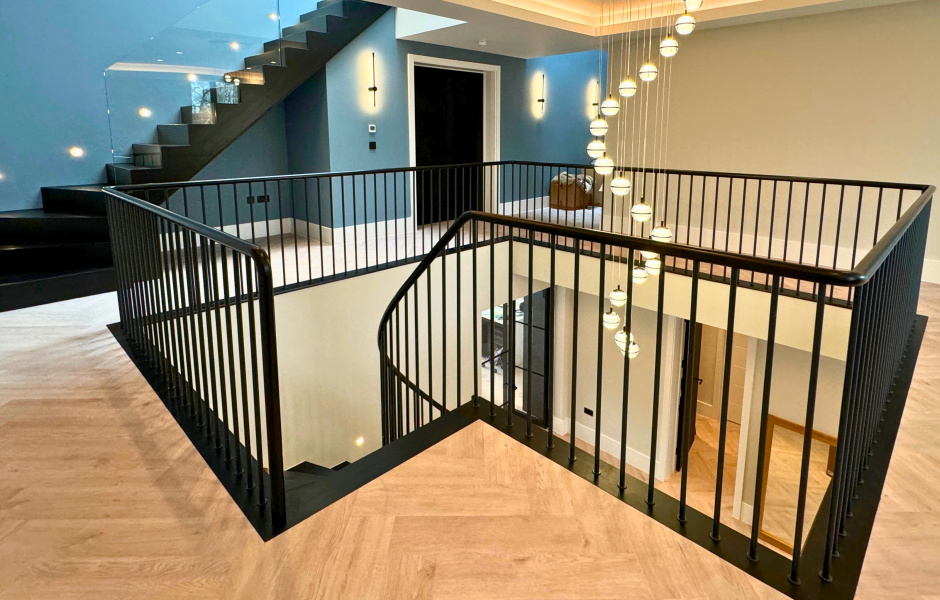
How to Measure Your Staircase Space Correctly
Whether you're replacing an existing staircase or planning one for a new build, getting your measurements right is the single most important step before any design work begins. A bespoke staircase is a significant investment — and inaccurate measurements can lead to costly delays, ill-fitting components, or a staircase that simply doesn't work in your space.
Here's a straightforward guide to measuring your staircase space correctly.
What You'll Need
- A steel tape measure (at least 5m)
- A spirit level
- A pencil and notepad (or your phone)
- A helper (highly recommended!)
The Key Measurements to Take
1. Total Rise (Floor to Floor Height)
This is the vertical distance from the finished floor level at the bottom to the finished floor level at the top. This is your most critical measurement — it determines how many steps your staircase will have and the height of each individual riser.
Tip: Always measure to the finished floor level, not the subfloor. If you're planning to add carpet, tiles, or engineered wood, account for that thickness before measuring.
2. Total Going (Horizontal Run)
This is the horizontal distance available for the staircase to travel — from where the bottom step begins to directly below where the top step ends. This measurement, combined with the rise, dictates the angle and overall footprint of the staircase.
3. Headroom Clearance
Building Regulations in the UK require a minimum headroom of 2 metres measured vertically from the pitch line (the imaginary line connecting the front edge of each step). Measure this carefully, particularly if there's a ceiling, beam, or landing above the staircase.
4. Width of the Staircase Opening
Measure the clear width between the walls or balustrades at the narrowest point. This will determine the usable width of each step. A comfortable staircase is typically 800mm–1000mm wide for a private home.
5. The Stairwell Opening
If your staircase rises through a floor (rather than against a wall), measure the full length and width of the opening in the upper floor. This is essential for calculating how the staircase will land and how much headroom you'll have.
6. Wall Positions and Obstructions
Note the position of any walls, doorways, radiators, or windows near the staircase. These can all affect the design, especially the handrail and balustrade layout.
Common Mistakes to Avoid
- Measuring to the subfloor instead of the finished floor level
- Only measuring in one place — walls are rarely perfectly straight or plumb, so take measurements at multiple points
- Forgetting headroom — this is one of the most common issues discovered too late in the process
- Ignoring door swings — make sure any nearby doors can still open freely once the staircase is installed
When to Call in the Professionals
While these measurements give you and your designer a strong starting point, a professional site survey is always recommended before fabrication begins. At Ovoms, every project starts with a detailed site visit to verify all measurements, check structural conditions, and ensure your bespoke staircase fits your space perfectly — down to the last millimetre. Contact us for a site survey at sales@ovoms.com