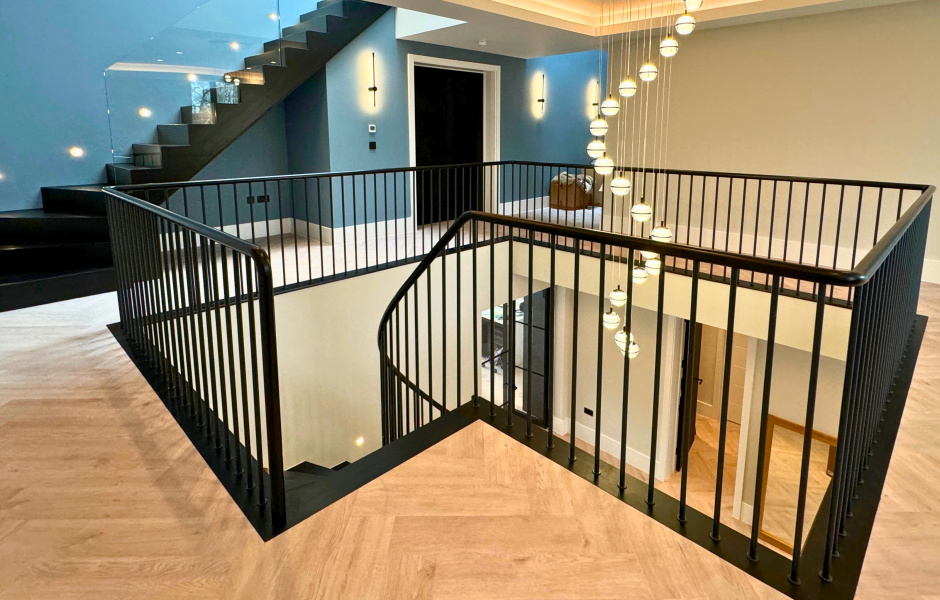
Designing a staircase is an exercise in harmonising structure, aesthetics and safety. While much attention naturally falls on the overall position and shape of the staircase, the finer details — the treads, balustrade and handrail — are what ultimately define its character. Among these components, the handrail plays a pivotal role. It guides movement, anchors the design visually, and completes the architectural rhythm of the staircase.
Crafting the perfect handrail requires thoughtful consideration of materiality, form, finish and regulatory compliance. Each decision shapes not only the appearance of your staircase, but also the experience of using it.
Handrail Materials
The material chosen for a handrail profoundly influences the atmosphere of the staircase. It determines the visual temperature of the design — whether warm and inviting, sleek and contemporary or boldly architectural.
Handrails may be crafted in a variety of materials, each offering a distinct aesthetic language:
Oak or other natural woods, ideal for homes seeking warmth, texture and a timeless finish. The grain introduces depth and brings a tactile richness to the design.
Metal, producing a more industrial or minimalist tone. Metal handrails pair beautifully with floating, zigzag or monorail staircases, reinforcing their structural clarity.
Glass, used as an embedded handrail within a frameless balustrade system, delivering the purest contemporary expression.
Selection should be guided by whether the handrail is intended to stand out as a focal feature or merge seamlessly with the staircase. Contrast can be deeply effective: a dark-stained oak handrail atop pale spindles, or a brushed metal rail complementing clear glass, both create subtle visual drama.
Handrail Shapes
The geometry of a handrail has a striking impact on the staircase’s visual language. Its form influences not only aesthetics but also ergonomic comfort.
Rounded handrails offer a fluid, softened silhouette. Their curvaceous profile fits naturally within the hand, guiding movement with an intuitive sense of ease. This style reduces visual bulk, allowing the staircase to feel lighter and more refined.
More angular or sculpted profiles introduce definition and architectural authority. Square or rectangular rails convey modernity and precision, aligning perfectly with contemporary floating or central spine staircases. Ornate or ogee-style shapes, although less common in modern interiors, remain an option for homes that favour traditional elegance.
Choosing the right shape involves balancing tactile comfort with the intended design statement.
Look & Finish of the Stairs
A handrail is a powerful tool for unifying or accentuating the broader staircase design. It can anchor colour schemes, frame architectural lines and provide contrast where the eye needs it most.
A staircase dominated by light tones — white spindles, pale walls, neutral treads — may benefit from a contrasting handrail in a darker shade to introduce depth and character. This single detail can visually ground the entire structure.
If storage is integrated beneath the stairs, painting the cabinetry in the same colour as the handrail creates a cohesive, intentional aesthetic. Similarly, retaining natural oak on both the handrail and the tops of the newel posts produces a harmonious dialogue between components.
The finish — whether matte, satin or high gloss — also influences perception. Matte feels understated and contemporary. Gloss highlights the craftsmanship and curvature of the rail. Satin offers the most balanced, versatile appearance.
Staircase Safety
Beyond design, the handrail plays a crucial role in ensuring compliance with safety regulations. Approved Document K outlines how staircases must protect users from falls, collisions and impact.
Key safety considerations include:
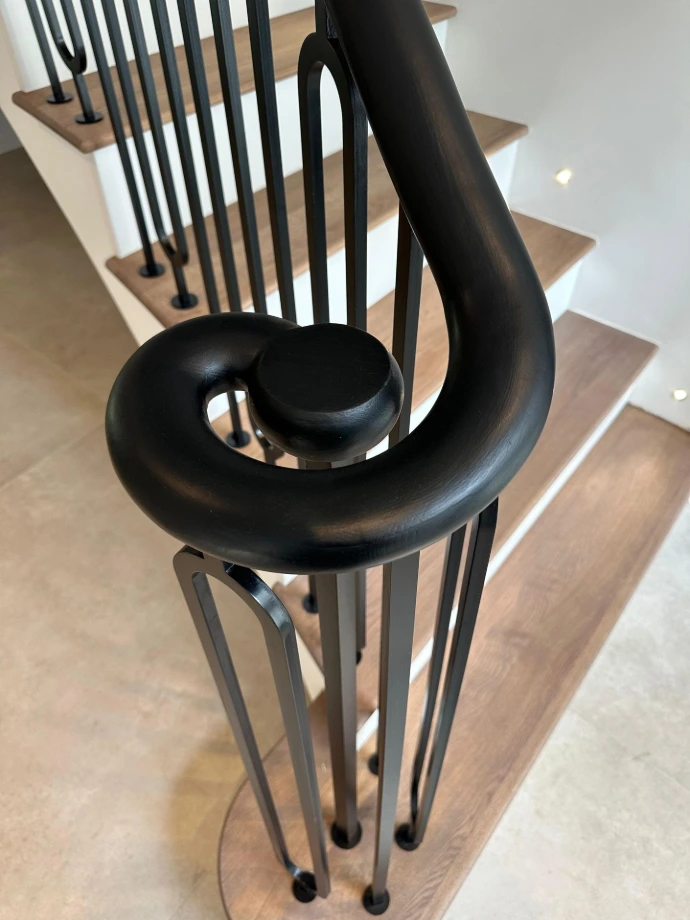
Height of the handrail above the pitch line or floor.
Placement on one or both sides of the staircase.
Continuity, ensuring a smooth and uninterrupted grip along the flight.
Grip profile, which must be suitable for safe handling.
Homes enjoy more flexibility than commercial or public buildings, which are subject to additional requirements. Nevertheless, every staircase should be engineered to provide reliable, comfortable and secure use for all occupants.
At Ovoms, each handrail design is meticulously planned to satisfy both aesthetic objectives and statutory obligations, ensuring the outcome is as safe as it is beautiful.
Start Your Staircase Design Project
Transforming your home with a bespoke staircase begins with a conversation. Ovoms designs and builds exceptional staircases for properties across London, the UK and internationally.
For a personalised consultation, 3D design preview and detailed quotation, the team is ready to assist at every stage of your project.