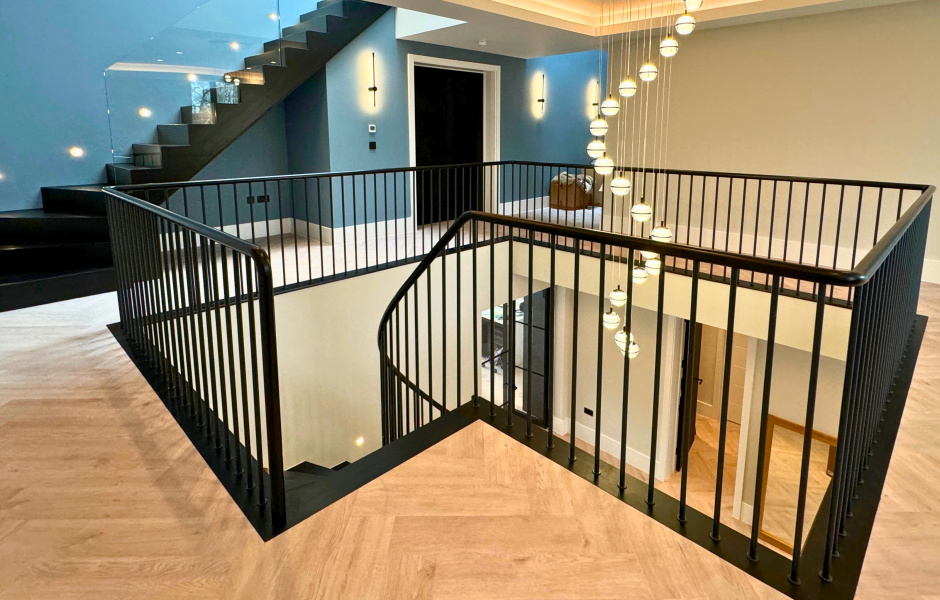
While your staircase designer will handle the technical calculations, understanding the basic principles will help you approach the project with clarity.
Total Rise
The starting point for any staircase design is the total rise — the vertical distance between one finished floor level and the next. This measurement determines:
How many treads are needed
The height of each riser
The overall pitch of the staircase
Tread & Riser Geometry
UK Building Regulations provide clear rules for private staircases, including:
Maximum riser height: 220mm
Minimum tread going: 220mm
Maximum pitch: 42°
These parameters ensure comfort and safety, preventing excessively steep or shallow staircases.
Landing Requirements
Landings must be sized appropriately for turning, resting or changing direction. Their dimensions also influence the overall flow of the staircase.
All calculations must comply with Approved Document K, ensuring each element meets statutory safety requirements.
What About Staircase Configuration?
The configuration is equally important. Choosing the correct form ensures the staircase works both practically and aesthetically within the available space.
Common configurations include:
Straight flight: Ideal for simple layouts and clean, modern interiors.
L-shaped staircase: Introduces a turn and a landing, improving flow and saving space.
U-shaped staircase: Better for tighter footprints or multi-level transitions.
Helical or curved staircases: Sculptural, elegant and ideal for large entrances or luxury designs.
Your staircase’s configuration must align with the architectural style of your home and its spatial constraints.
Do Staircase Materials Matter?
Absolutely. Materials play a crucial role in determining the structural requirements and overall dimensions of the staircase.
For example:
Wide staircases may require thicker treads for structural rigidity.
Stone, concrete or engineered materials demand deeper supports.
Floating staircases require embedded steelwork, influencing the depth of the wall void.
Glass balustrades may affect the width allowance due to panel thickness.
Material selection directly influences both the engineering and the aesthetic outcome.
Expert Staircase Design
For a staircase that is precisely engineered, beautifully crafted and tailored to your home, expert planning is essential. Ovoms specialises in designing and manufacturing premium staircases — from floating and zigzag designs to curved central spine structures.
We work across London, the UK and international locations, providing full design, structural engineering, manufacturing and installation services. Contact us today!