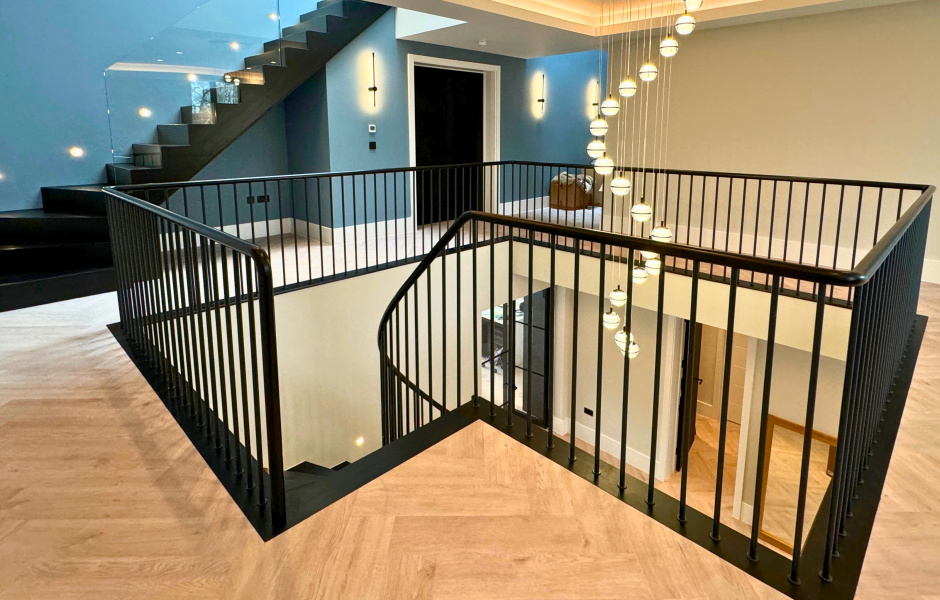
Choosing the Best Position for a New Staircase
When designing a staircase for your home, there are many decisions to make — from the materials you choose to the style of treads and balustrades you love. But just as important is where the staircase will be positioned in your layout. The location of your staircase affects safety, natural light, circulation and the overall feel of your home.
Here are Ovoms’ top considerations when choosing the perfect position for a new staircase.
Replacing Existing Stairs vs. Designing a New Layout
If you’re renovating and replacing an existing staircase, the simplest option is often to keep it in the same location. However, this doesn’t mean you can’t improve the design. A fresh layout, different orientation or a floating/central spine structure may open up your space and transform the look of your home.
For new builds, extensions or loft conversions, you’ll have far more freedom. With a blank canvas, your architect and staircase designer can create a layout that perfectly complements the flow of the property.
Building Regulations for New Staircases
Positioning must always comply with UK Building Regulations, including Approved Document K, which covers safety requirements such as:
Headroom
Tread and riser sizing
Landings
Handrails
Protection from falling
Clear fire escape routes
Your staircase must fit comfortably within the structure while maintaining safe geometry and compliant circulation paths. At Ovoms, we design all staircases to meet or exceed these standards.
Maximising Natural Light
Your staircase should never block essential daylight. When planning its position, consider how light moves through the space throughout the day.
Glass balustrades, open-tread floating staircases and minimalistic designs can help light pass through more freely — perfect for homes where brightness and openness are a priority. Discuss with your architect and designer how to preserve or enhance natural light within your layout.
Exploring Unique Staircase Shapes
Experimenting with staircase placement can introduce opportunities for more creative shapes, such as:
L-shaped staircases
U-shaped staircases
Helical/curved staircases
Spiral staircases
Floating staircases with directional turns
A well-positioned staircase can become a beautiful architectural centrepiece, especially in open-plan homes or larger entrance halls. Helical and curved staircases, in particular, create dramatic visual impact while offering smooth circulation between levels.
Practical Considerations for Everyday Use
A stunning design means very little if the staircase isn’t practical for daily life. When choosing its location, consider:
Ease of access from key areas
Travel routes between floors
Fire safety and escape path requirements
Not needing to pass through awkward rooms to reach the staircase
How the staircase connects to landings, hallways and living spaces
Most homeowners prefer the staircase to be close to the entrance area for convenience and safety — but your designer can present alternative layouts depending on your home’s structure.
Start Your Staircase Project with Ovoms
To achieve the perfect layout and design, involve a specialist from the very beginning. At Ovoms, we design, manufacture and install bespoke staircases across London, the UK and internationally. From floating oak staircases to curved central spine designs, we help you choose the ideal structure and position for your home.
Contact us today to begin your project with Ovoms — where engineering precision meets timeless craftsmanship.